

graph LR
    A(Other Business Wallets) --> B(Business Wallets)
    C(Attestation Providers and Other Trust Service Providers) --> B
    B --> D(Other Business or Digital Identity Wallets)
    B --> E(Other Relying Parties)

    %% Styling
    classDef externalActor stroke:#0000ff, stroke-width:2px
    classDef businessWallet color:#ffffff, fill:#0000ff, stroke:#0000aa, stroke-width:2px, font-weight:bold, border-radius:15px

    class A,C,D,E externalActor
    class B businessWallet
Business Wallet Definition
Revision 1.1
1 Scope and context
This document sets out a non-technical working definition of “business wallet” as introduced in the European Business Wallet (EBW) regulatory proposal, to support a common interpretation within WE BUILD and in dialogue with the European Commission. It is intended as reference material for the WE BUILD use case and capability work. It does not cover detailed architecture, protocol choices, implementation design, or use case roadmaps.
This document draws on the EUDI Wallet regulations, EWC deliverables [6], and relevant industry and consortium publications. Its main legal reference is the text of the proposed Regulation on the establishment of European Business Wallets as agreed in the Council’s general approach of 9 June 2026, published as Council document 10346/26 [2], read together with the original Commission proposal COM(2025) 838 [1] and the European Parliament ITRE rapporteur’s draft report [3].
2 Purpose of the European Business Wallet
The EBW is a digital tool for economic operators — companies, organisations, self-employed persons, sole traders and other entities conducting economic activity — to interact with public sector bodies when meeting reporting obligations and fulfilling administrative procedures, and to reuse the same trusted functions in business-to-business settings. Its purpose is to:
- reduce administrative burdens and compliance costs by replacing paper-based and fragmented digital processes;
- give economic operators and public sector bodies secure and trusted digital identification across borders;
- enable digital management of representation rights and authorisations; and
- provide a secure channel for exchanging official documents, attestations and legally valid notifications, supported by a common directory.
3 Core concepts
3.1 Description
A Business Wallet is a combination of software, hardware, services, settings and configurations that enables an organisation to identify itself, manage authorisations, exchange verified attributes and documents, and receive legally relevant notifications in support of administrative and regulatory procedures.
In the words of the draft Regulation, a European Business Wallet is a digital solution that allows its owner to securely receive, store, manage, combine and present owner identification data and electronic attestations of attributes to relying parties and to other entities using EBWs or EUDI Wallets. The European Parliament rapporteur proposes to make explicit that the wallet must also securely request and obtain such data, underlining that the wallet is an active participant in data exchange, not only a store. In practical terms, the wallet:
- authenticates its owner and provides verified owner identification data to relying parties;
- gives access to electronic attestations of attributes, electronic signatures and seals, electronic registered delivery and time stamps; and
- lets the owner create, manage, delegate and revoke authorisations for its users.
Unlike EUDI Wallets, a EBW does not need to be an eID means under an eID scheme, although it may reuse similar components.
A full technical decomposition is out of scope for this document. For orientation, the draft Reguladdtion itself distinguishes the wallet solution (the combination of software, hardware, services and configurations offered by a provider), the wallet unit (a unique configuration of that solution provided to a specific owner), the front-end (the user-facing component) and the back-end (the server-side components).
3.2 Wallet owner, users and representatives
Each Business Wallet has a single wallet owner, which is the entity that the wallet represents through its interactions. Note that this is distinct from, for example, the company owner or the wallet provider. An economic operator can become a wallet owner through ownership, licence, subscription or any other agreement granting a right of use.
The wallet owner is defined by European Business Wallet Owner Identification Data (EBWOID), which includes at least the official name of the owner as recorded in the relevant register, and an EU-unique identifier. These owner identification data are issued into the business wallet as an electronic attestation of attributes and must be cryptographically bound to the wallet of the owner.
A Business Wallet can have multiple wallet users, meaning natural or legal persons that operate the wallet through a user interface or an application programming interface under roles and authorisations set by the wallet owner. These wallet users may apply software applications to access these interfaces. Some users may be authorised representatives, while others may be employees or service providers operating within delegated permissions.
On terminology: the Commission proposal used the term “mandate” for the permission granted by an owner to a representative. The Council text replaces this with authorisation, defined as the granting or recognition of a right or permission, given by the owner to a wallet user, to perform specified actions on specified resources or functionalities, together with the corresponding access-control decision for each concrete request. Two points follow:
- Authorisations in the wallet are technical. They do not create, limit or otherwise affect any power of attorney or legal mandate under national or Union law.
- The authorisation system should remain compatible with the EU digital power of attorney established by Directive (EU) 2025/25.
3.3 Relationship with the EUDI Wallet
The EBW builds on and complements the EUDI Framework:
- The proposal amends Article 5a of the eIDAS Regulation so that the mandatory issuance of European Digital Identity Wallets applies to natural persons only. The EBW becomes the intended solution for legal persons and other economic operators.
- EUDI Wallets, notified eID means and electronic attestations of attributes can be used to onboard the owner and to authenticate wallet users. The natural person who enrols the owner (a legal representative or other lawfully empowered person) identifies with an eID means at level of assurance “high”.
- Self-employed persons and sole traders do not need to create a separate business identity: providers must offer the wallet’s secure communication channel (QERDS) as a standalone service that these persons can use with their EUDI Wallet in a business capacity, at reasonable and affordable prices.
- The EP rapporteur adds, at recital level, that the use of EUDI Wallets should be enabled but not required, and that individual and business use should remain distinguishable. This is an architectural direction rather than an operative rule.
3.4 Conceptual model
3.5 Actors of EBW
graph TB
    Owner(Wallet owner) -->|"is represented by, accountable for"| EBW(Business Wallet)
    Users(Wallet users / authorised representatives) -->|"operate under authorisations"| EBW
    Provider(EBW provider) -->|"provides and maintains"| EBW
    OID(Provider of EBWOID) -->|"issues owner identification data"| EBW
    EBW ---|"digital address listed in"| Dir(European Digital Directory)
    COM(European Commission) -->|"operates"| Dir
    Sup(Supervisory body) -->|"authorises and supervises"| Provider

    classDef externalActor stroke:#0000ff, stroke-width:2px
    classDef businessWallet color:#ffffff, fill:#0000ff, stroke:#0000aa, stroke-width:2px, font-weight:bold, border-radius:15px
    class Owner,Users,Provider,OID,Dir,COM,Sup externalActor
    class EBW businessWallet
4 Business Wallet definition
A business wallet enables its owner, amongst other operations, to act as:
- Issuer, holder or verifier of electronic attestations of attributes
- Signatory or origin of sealed data
- Sender or recipient of messages, such as submissions and notifications
4.1 Types of requirements
The draft Regulation organises the requirements on Business Wallets in layers. Understanding these layers helps to read the rest of this document and to plan conformance work:
graph TD
    A["Core functionalities"] --> E["Implementing acts<br/>reference standards, specifications, procedures"]
    B["Technical features"] --> E
    C["Provider requirements and obligations"] --> E
    D["Annex — minimum technical requirements"] --> E
    E --> F["Provider authorisation and supervision"]

    classDef layer stroke:#0000ff, stroke-width:2px
    class A,B,C,D,E,F layer
- Core functionalities — the capabilities every EBW must give its owner. In simplified form: securely issue, request, obtain, select, combine, store, delete, share and present electronic attestations of attributes, with selective disclosure; securely exchange EBWOID and attestations with other EBWs, EUDI Wallets and relying parties; sign with qualified electronic signatures and seal with qualified electronic seals; use qualified electronic time stamps; have attestations issued for data for which the owner is the primary source, and link attestations into verifiable chains; authenticate users with qualified and non-qualified attestations; transmit and receive documents and data via the QERDS set out in the Annex; authorise multiple users and manage and revoke those authorisations; authorise and manage relying-party requests; export and import wallet data; access a log of all communications and transactions; and access a common dashboard for the QERDS channel. Providers may offer additional functionalities as long as these do not compromise the core.
- Technical features — the common protocols and interfaces the wallet must support: issuance of EBWOID, attestations and certificates; relying-party request and validation; sharing and presentation with selective disclosure; interaction automatically without manual intervention or through direct user action; secure remote onboarding; wallet-to-wallet interaction (EBW–EBW and EBW–EUDIW); relying-party authentication; verification of wallet authenticity and validity; QERDS provision including the Directory interface and at least one unique digital address per owner; and wallet unit attestations. Accessibility for persons with disabilities is also mandated.
- Provider requirements and obligations — who may provide wallets and under what conditions.
- Annex requirements — minimum technical requirements grouped by topic: unit authentication, unit integrity, secure communication and critical asset management, secure cryptographic applications, unit authenticity and validity, revocation of unit attestations, transaction logs, qualified signatures and seals, signature creation applications, data export, import and portability, the secure legal communication channel, the access control mechanism, general protocols and interfaces, and issuance of attestations and EBWOID to wallet units.
- Implementing acts — the Commission will adopt lists of reference standards and, where necessary, specifications and procedures for the core functionalities, technical features, provider risk management, EBWOID, unique identifiers and the Directory. In the Council text these acts are due within one year of entry into force. The actual interoperability of the ecosystem will largely be decided in these acts.
- Authorisation and supervision — the process through which providers are admitted to and kept on the trusted list.
4.2 Architecture overview
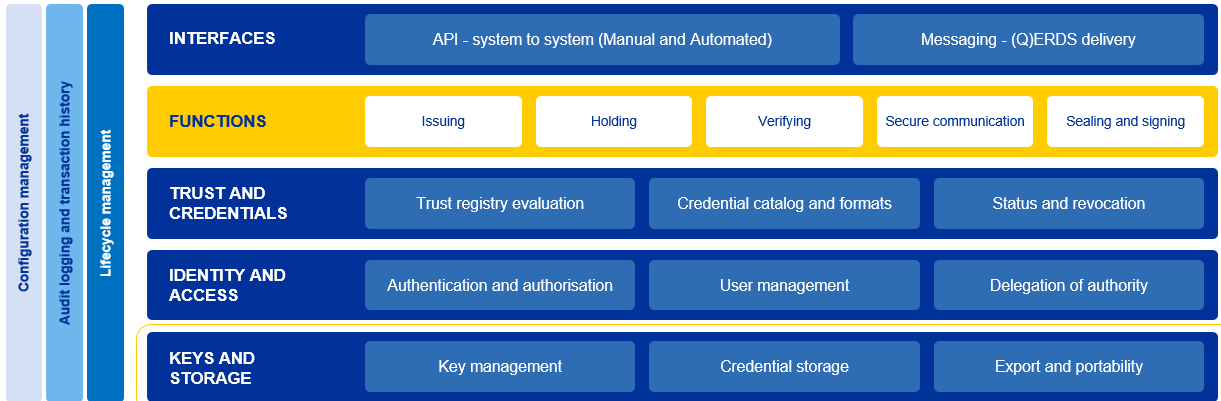 Figure D.1: architecture overview of the EBW.
The figure groups the capabilities of a business wallet in five layers, from the interfaces it exposes to the keys and storage at its core, with three concerns that apply across all of them. The business wallet is a set of standardised identity, trust and authorisation services, and an entry point into a broader trust infrastructure rather than that infrastructure itself. Transactional business data and operational workflows stay in the systems that already hold them. Several of these capabilities are described in more detail under Key functions below.
4.2.1 Interfaces
The wallet exposes its capabilities to the people who operate it and to the systems of the wallet owner. Interaction is user-driven or automated without manual intervention, which is what makes the wallet usable between systems. Counterparties, endpoints and digital addresses can be found through the European Digital Directory.
4.2.2 Functions supported
These are the operations the owner performs through the wallet, matching the roles set out above. Issuing, holding and verifying concern electronic attestations of attributes. The secure communication channel carries submissions and notifications. Sealing and signing give legal effect. Attestations and data transfer are deliberately kept apart.
- Issuing. Attestations are issued into other wallets and can be linked into a verifiable chain.
- Holding. Receiving, storing, selecting, combining and presenting attestations, with selective disclosure so that only the attributes needed for an interaction are shared.
- Verifying. Requesting and validating attestations and owner identification data. Where no person approves each exchange, release follows the automatic approval list the owner controls. Authorising relying parties to request attestations is separate from authorising the wallet’s own users.
- Secure communication channel. Submissions and notifications are transmitted and received over a qualified electronic registered delivery service, which supplies the evidence of sending and receipt. The channel is described under Key functions.
- Sealing and signing. Qualified signatures and seals are created with qualified certificates and a local, external or remote creation device, and qualified time stamps bind data to a point in time. The creation application may come from the wallet provider, a trust service provider or a relying party.
4.2.3 Trust and credentials
This layer is what the functions rely on. Trust registry consumption and evaluation means resolving trust anchors from published trusted lists and evaluating counterparties against them; the wallet consumes those lists rather than operating them. What a counterparty is entitled to do is established separately, through registration data and relying-party access certificates. Credential catalog and schema management covers the attestation schemes and rulebooks a wallet supports, which determine how an attestation is structured and interpreted. Cryptographic functions and credential format management covers the formats and cryptographic profiles it supports. Status management and revocation let a relying party check whether an attestation is still valid, using the IETF Token Status List.
4.2.4 Identity and access management
The owner is identified by EBWOID, a stable minimal attribute set cryptographically bound to the wallet. Users authenticate with an eID means before any wallet functionality becomes available. Authorisations granted inside the wallet, whether technical or administrative, do not create, limit or affect any power of attorney or legal mandate. Delegation of authority supports both role-based and service-based models.
4.2.5 Keys and storage
Keys are generated, protected and used inside a wallet secure cryptographic application and device. Attestations and documents are stored for the owner, and export and import make that data portable between wallet providers.
4.2.6 Cross-cutting concerns
Configuration management holds the policies the owner sets and controls, including the automatic approval list. Audit logging and transaction history records transactions with relying parties and other wallets, whether or not they complete, so the owner keeps control and disputes can be resolved. Lifecycle management covers enrolment of the owner, the business wallet unit attestation that lets others check the wallet’s authenticity and validity, and suspension, revocation and termination.
4.3 Key functions
4.3.1 Wallet lifecycle management
The business wallet enrols its owner via the eID of an authorised (legal) representative — using an eID means at assurance level “high” — and facilitates enrolment in connected trust services and directory services. The wallet provider is responsible for attesting to its validity to relying parties (via wallet unit attestations and public validity information) and enabling authorised representatives to revoke the business wallet and perform other lifecycle changes.
The validity of a wallet must be revocable at least in the following circumstances:
- Upon explicit request of the owner.
- Where the security of the wallet has been compromised.
- Upon permanent or temporary cessation of the owner’s activity.
- Where the provider is removed from the list of authorised providers.
Users affected by the revocation of a wallet unit attestation must be informed within 24 hours. Providers must also maintain termination plans that keep information accessible if they cease their activities, and must notify owners of suspension, revocation or termination of the service and transfer or delete owner data according to the owner’s instructions.
4.3.2 Owner identification data and unique identifiers
EBWOID establishes the identity of the owner. Key points:
- EBWOID is issued in one of the standard formats of Implementing Regulation (EU) 2024/2979 as: a qualified electronic attestation of attributes (issued by a QTSP); an attestation issued by or on behalf of a public sector body responsible for an authentic source; or an attestation issued by the Commission (for Union entities). Commission-issued EBWOID has the same legal effect as the other two forms.
- It contains at least the official name of the owner as recorded in the relevant register, and the unique identifier.
- Where the owner has been attributed a European Unique Identifier (EUID) under Directive (EU) 2017/1132 (publicly accessible through BRIS and used by BORIS), that identifier is used. Owners without an EUID receive a similar unique identifier created in accordance with a Commission implementing act, with measures ensuring that no owner has more than one identifier.
- Verification relies on authentic sources (business registers and other registers), which Member States notify to the Commission; the Commission publishes the list in machine-readable form.
- EBWOID must be cryptographically bound to the owner’s wallet.
- The Commission maintains an attestation scheme for EBWOID in the EU catalogue of schemes.
4.3.3 Digital document management
The business wallet enables the wallet owner to create, store, use and validate various types of digital documents:
- Electronic attestations of attributes (EAAs, including QEAA, PuB-EAA, and EAA issued by the Commission)
- Business documents, such as electronic invoices
- Qualified certificates for electronic signatures and seals
- Qualified electronic signatures, seals and timestamps
- Evidence, such as provided by trust service providers upon electronic transactions, or by public sector bodies over the single digital gateway
Additional points from the draft Regulation:
- Selective disclosure: the owner can disclose only the identification data and attributes needed for a given interaction.
- Owner-as-primary-source attestations: attestations can be securely issued, by the provider on behalf of the owner, for data for which the owner itself is the primary source. The legal issuer model for these attestations is still open.
- Linked (chained) attestations: an attestation can be cryptographically linked to others so that each attestation, and the chain as a whole, can be verified for authenticity and integrity. This supports submitting an attestation once and reusing a verifiable reference (for example a hash of a sealed attestation) across procedures.
- Typical business attributes expected in the ecosystem include current address, VAT registration number, tax reference number, Legal Entity Identifier (LEI), EORI number and excise number.
WE BUILD implementation note: _The WP4 Wallet Providers provide, as part of their business wallet solutions, a subset of the functionalities required by the use cases. For the functionalities that require qualified trust services, such as the issuance of qualified certificates or the sealing of documents with qualified electronic seals, the WP4 QTSP group provides these services within WE BUILD. For reference, see the QTSP documentation.
4.3.4 Secure communication channel
To enable public and private sector information exchange, such as in B2G eGovernment notifications, B2B/B2G eProcurement business documents and other business use cases, a business wallet implements a secure communication channel with other business wallets, with users of digital identity wallets, or with alternative solutions provided through a gateway. This channel enables cross-border delivery and receipt of submissions and notifications with legal effect, and provides a trusted channel with public authorities and other regulated parties across the EU.
The channel is implemented using a qualified electronic registered delivery service (QERDS). Key requirements:
- The Commission will, by implementing act, designate the protocol and set standards and specifications for compliant implementations of the specific QERDS that serves as the mandatory secure legal communication channel. (The EP rapporteur proposes to allow one or more QERDS with redundancy and fallback; the Council text keeps a single designated channel with procedures for continuous availability, redundancy and fallback.)
- The designated QERDS must be based on open, publicly available and royalty-free standards and provide end-to-end encryption.
- Each owner is assigned at least one unique digital address, registered in the European Digital Directory.
- Owners access a common dashboard for storing and verifying QERDS communications.
Two standalone service obligations widen access to the channel:
- Providers must offer the QERDS as a standalone service to self-employed persons and sole traders using their EUDI Wallets in a business capacity.
- Providers must offer, as a standalone service, a unique digital address to public sector bodies that do not own an EBW, so those bodies can be listed in the Directory and reached over the channel.
Each exchange that requires legal-grade assurance produces qualified evidence of submission, relay, delivery, retrieval, and acceptance. Wallets remain the user-facing endpoints where authorised representatives and connected business applications read, approve, and manage messages; QERDS providers operate the delivery layer underneath, handling routing, inter-provider relay, and evidence creation. For the full technical flow and use-case scenarios, see the Blueprint integration model — Secure Communication Channel and the QERDS documentation.
WE BUILD implementation note: the WP4 QTSP group will explore delivering an interoperable pre-production QERDS, along with CIR (EU) 2025/1944 requirements, as a service to the WP4 Wallet Providers group, working with the WP4 Architecture group on cross-cutting concerns, such as interoperability specifications. This enables wallet providers to provide a business wallet to the use cases with a digital address and access to the designated QERDS. For reference, see the QERDS documentation.
High-level architecture
WE BUILD follows the ETSI EN 319 522 four-corner model: each business wallet connects only to its own QERDS provider. Providers relay messages and evidences when both the sender and the recipient use different QTSP. The recipient’s digital address and QERDS capabilities discovery uses common directory services.
flowchart LR
    RP(Relying Party) -->|Validates delivery|QP[QERDS Provider]
    QP -->|Provides the QERDS|BWU[Business Wallet Unit]
    BA(Business Application) -->|Uses API|BWU
    U(User) -->|Uses UI|BWU
    BWU -->|Discovers services and capabilities|DD[Digital Directory]
    BWU -.->|Shares data|Q1
    subgraph QERDS 4-corner secure channel
        Q1[QTSP 1] -.-> Q2[QTSP 2]
    end
    Q2 -.-> BWU2[Business Wallet Unit]
Data transmission, sending data and receiving data reference scenarios are described in QERDS between wallets, which can be complemented with the corresponding sequence diagrams from QERDS architecture overview.
Per ADR: Separate the QERDS agent, log and relay, WE BUILD treats delivery agent (submission, reception, identity verification), delivery log (evidence retention), and delivery relay (inter-provider transport) as orthogonal concerns, as proposed in ETSI TR 119 520-1. End-to-end confidentiality of user content is enforced at the delivery agent layer; inter-provider relay protects relay metadata and provider authentication.
Communication protocol: WMP
The secure communication channel uses two complementary protocol layers. A business wallet does not exchange messages directly with another wallet or with a foreign trust service provider. Instead, each wallet interacts only with its own QERDS provider, delegating routing, evidence management, and inter-provider relay.
flowchart LR
    B1(Sender Business Wallet) -->|WMP|Q1["Sender QERDS\n(QTSP 1)"]
    Q1 -->|AS4| Q2["Recipient QERDS\n(QTSP 2)"]
    Q2 -->|WMP| B2(Recipient Business Wallet)
Wallet Messaging Protocol (WMP) is the optional API access protocol between a business wallet and its QERDS provider, as decided in ADR: Deliver business wallet data using QERDS and proposed in Pull Request #184 - QERDS EBW–QTSP Interface. WMP is a JSON-RPC 2.0 messaging protocol with a mandatory MLS encryption layer for QERDS subscriber content and an evidence profile aligned with ETSI EN 319 522 registered-delivery requirements. See Wallet Messaging Protocol for additional information.
Note: This blueprint uses WMP as the protocol selected within WE BUILD for piloting and testing the EBW-QERDS interface, in anticipation of the Commission Implementing Regulation. Please note that WMP is not a formally standardised protocol and should not be interpreted as such.
WE BUILD Conformance Specifications mapping
| Topic | WBCS | Architecture interface |
|---|---|---|
| EBW-QERDS API and protocol | (PR #184) CS-005: EBW–QTSP WMP Interface | Data transmission; evidence transmission; notification creation; data submission |
| Inter-QTSP message relay | (PR #261) CS-007: QeRDS Four-Corner AS4 | Message relay |
| Credential presentation at QERDS onboarding | CS-002: Credential Presentation | Identity verification |
4.3.5 European Digital Directory
The Commission establishes, operates and maintains a European Digital Directory as the trusted source of information for EBW owners. It takes the form of a web application with two interfaces: a machine-readable API for system-to-system communication, and a secure web portal for authenticated and authorised wallet users.
For each owner, providers submit at least: the official name (as in the national register of the country of establishment or habitual residence), the unique identifier, the digital address(es), and the country of establishment. Public sector bodies that are not EBW owners are also listed, with the same categories of information. The Directory relies on information made available by business registers (including through BRIS) without duplicating it, and must comply with data-protection principles such as data minimisation.
4.3.6 Access control mechanism
To enable wallet owners, authorised representatives and other authorised users to access the business wallet while preventing unauthorised access, each business wallet implements role-based access control for the assets it protects, including digital documents and the secure communication channel. To identify, authenticate, and authorise wallet users, the access control mechanism relies on electronic identification means, such as digital identity wallets, and, potentially, on trust services for the electronic attestation of attributes. Access to a wallet unit is granted only after successful authentication with a notified eID means at assurance level “substantial” at least, or an alternative mechanism recognised as equivalent.
Authorisation decisions are based on one or more of: the attestations of the acting subject; the subject’s formal role within a recognised organisational structure; the scope, validity and constraints of any mandate, delegation or power of attorney; and contextual policies at Union or national level. Providers must ensure that:
- authorisation outcomes are fine-grained and auditable: visibility of credentials is selective and conditioned on access rights; access to business processes and submission interfaces is controlled by real-time validation of roles and mandates; and all access and execution events are logged, timestamped and bound to cryptographically verifiable proofs of authorisation suitable for audit and legal proceedings;
- mappings between roles and attributes are verifiable, auditable, revocable and traceable to their legitimate issuers;
- conflicts of roles, over-delegation and expired authorisations are automatically detected and prevented in real time; and
- all authorisation logic is interoperable between European Business Wallets across Member States.
The formats for roles and attributes, interoperability mechanisms for mandates and delegations across wallets, protocols and policy language, and logging requirements will be defined in implementing acts; the exchange of data on authorisations with national registers is named as an example of what these acts will cover.
WE BUILD implementation note: The WP4 Architecture group, in collaboration with the WP4 Wallet Providers group, will explore the access-control mechanism for business-wallet solutions. This may rely on the EUDI wallets within WE BUILD or on other electronic identification means.
4.3.7 Digital transaction management
Business wallets keep logs and provide dashboard user interfaces to enable control over transactions, including operations on the wallet lifecycle and on digital documents and messages sent and received over the secure communication channel. In addition, these logs enable dispute resolution regarding potentially unauthorised transactions, failures to meet reporting obligations, or administrative or procedural activities.
The minimum logging policy:
- Electronic signing, sealing and notifications of all transactions with relying parties, other EBW units and EUDI Wallet units are logged whether or not the transaction completes. Each entry contains at least the time and date.
- The name, contact details and unique identifier of the relying party (or wallet unit attestation information for other wallets).
- The types of data requested and presented.
- For non-completed transactions, the reason.
Providers must ensure the integrity, authenticity, availability and confidentiality of the logs, which remain accessible as long as required by Union or national law.
4.3.8 Data export, import and portability
The wallet owner can export its data — including issued EBWOID, electronic attestations of attributes, communication logs and transaction records — in a structured, commonly used and machine-readable format, on request (European Council explicitly requested removal of this feature) or when the service terminates or the provider loses its authorisation. The owner can also import such data to another provider’s wallet, enabling portability across providers.
Portability of data does not by itself settle the continuity of cryptographic keys, provider-bound attestations, wallet unit attestations, authorisation structures or directory and delivery addresses across a migration; these remain design questions.
4.3.9 User and permission management
WE BUILD supports signing scenarios where an individual signs on behalf of an organisation. This model reuses the wallet-centric and QTSP-operated signing approaches described in chapter 4. The wallet provides the user interface for document review and approval, while the QTSP performs the signature or seal creation within its controlled environment. In addition WE BUILD may also support other signing scenarios enabled by the use of QERDS and the EU Business Wallet.
5 Ecosystem and governance
5.1 Wallet providers and supervision
Only providers included in the Commission’s public, machine-readable list of authorised providers may provide EBWs. The conditions and obligations are many, ranging from where the provider is established, if it is a trust service provider or not, as well as policies for risk management, etc. In the WE BUILD scope we will host a list of the Business Wallet providers in the consortium.
6 Obligations on public sector bodies
Public sector bodies must enable economic operators to use the wallet’s core functionalities to identify and authenticate, sign or seal, submit documents, and send or receive notifications, for the purpose of meeting a reporting obligation or fulfilling an administrative procedure. For submissions and notifications they shall themselves have EBWs including the QERDS channel. Public sector bodies keep flexibility on how they accept the wallets, may maintain existing interfaces and digital tools, and should avoid disproportionate burdens especially on SMEs.
7 Current challenges and open topics
The following topics are known to be unsettled but is needed for the WE BUILD use cases to move forward.
7.1 Automated machine-to-machine communication and agent-mediated transactions
What is known. The Regulation requires protocols and interfaces that allow interaction with the wallet “automatically without manual intervention or through direct wallet user action”, and API access is part of the wallet concept. It names the integration of new technologies enabling new use cases, “such as agentic AI or the provision of a digital identity to an owner’s asset”, as material for future implementing acts. The ITRE draft report goes further: it defines an “automated transaction”, requires that automated actions take place under a valid, auditable and revocable authorisation, and requires assurance and accountability equivalent to a direct user action. WE BUILD has published a non-paper arguing that the EUDI and Business Wallet frameworks can provide the trust infrastructure for AI agents (mutual authentication of agents, verifiable human–agent relationships, verified merchants) [7].
What is open. The identity or technical identity of the agent; the credential or delegation object that expresses the scope, duration and revocability of its authority; the policy language; the audit evidence; and liability when an agent acts outside its authority. None of these is specified in the legal texts; they are architecture and implementing-act questions.
WE BUILD implementation note: per the ITRE briefing, this topic should cover agent identity, delegated authority, revocation, audit evidence, assurance equivalence and accountability — not only an M2M transport protocol.
7.2 Business identity outside eID schemes and mutual identification of wallets
What is known. An EBW does not need to be an eID means. Identification and authentication in the framework rely on electronic attestations issued by trusted entities. Wallets must interact with other EBWs and with EUDI Wallets, authenticate relying parties where required, and prove their own authenticity and validity via wallet unit attestations and validation mechanisms.
What is open. The relying-party authentication mechanism; whether EUDI Wallet relying-party access certificates are reused unchanged; the precise relationship between EBWOID (owner), the wallet unit attestation (wallet unit) and the credentials of the acting representative (user); and the consent and disclosure-policy handshake between wallets.
WE BUILD implementation note: EBWOID, wallet unit attestation, representative identity, relying-party authentication and consent should be kept as distinct design elements in the WE BUILD conformance and architecture work.
7.4 Owner-issued (“primary source”) attestations
What is known. Attestations can be issued, by the provider on behalf of the owner, for data for which the owner is the primary source, and linked into verifiable chains.
What is open. Whether the owner, the provider or a separate attestation provider is the legal issuer; who appears in the issuer field; whether the attestation asserts only that the owner declared the data or that it was verified; which assurance, status and revocation rules apply; and whether this issuance is a trust service.
7.5 QERDS designation, multiplicity and resilience
What is known. Requirements on the protocol and the standards for compliant implementations of “the specific” QERDS serving as the mandatory channel, are many but should be open royalty-free standards, end-to-end encryption, and procedures for continuous availability, redundancy and fallback. The EP rapporteur allows one or more QERDS.
What is open. Whether multiple designated services will coexist; provider selection; routing and address resolution; portability between QERDS providers; and whether every wallet must be preconfigured with more than one service. For Member States with an established national delivery channel that is not a QERDS, the coexistence of that channel with a designated EU-level QERDS is a further open question.
7.6 Separation of personal and professional identity: the “Employee Wallet” idea
What is known. The Regulation expects the natural persons acting for an owner — representatives and employees — to authenticate to the wallet with electronic identification means, such as EUDI Wallets. In practice, this raises a concern: employees may not want to use their personal EUDI Wallet, typically installed on a private device, for professional actions, and many organisations prohibit the use of private devices or private identity means for business transactions. The EP rapporteur’s recital-level position that individual and business use should remain distinguishable points in the same direction.
Current ideas. One market response is a companion mobile application for employees — often called an “Employee Wallet” — that works together with the (typically web-based) Business Wallet of the organisation. The idea: the organisation issues professional credentials (for example a verified-employee attestation with name, employee ID and department) from its Business Wallet into the employee’s companion wallet; the employee then uses these professional credentials to authenticate to the EBW and to act in their professional role, while their personal EUDI Wallet and personal credentials stay separate. This separates professional life from private life and keeps the employment relationship, not the private identity, at the centre of business transactions. Such solutions already exist in the market: at least one WE BUILD participant offers an organisational Business Wallet that issues and verifies credentials such as employee IDs, together with a companion wallet for individuals that manages personal and professional credentials in one secure app while keeping them distinguishable [8]. The broader rationale for separating “private individual” and “employee” credential contexts is also discussed in the wider identity community [9].
What is open. The Employee Wallet is a market concept, not something defined in the draft Regulation. Open questions include: who issues and revokes employee credentials and how their lifecycle follows the employment relationship (for example revocation when employment ends); which assurance level such an app can reach and whether it qualifies as “an alternative authentication mechanism recognised as equivalent” to a notified eID means at level “substantial” ; how it relates to the wallet’s role and authorisation model; and device policy (private versus corporate devices).
8 References
- European Commission, Proposal for a Regulation on the establishment of European Business Wallets, COM(2025) 838, 19 November 2025 — EUR-Lex; accompanying Staff Working Document SWD(2025) 837.
- Council of the European Union, General approach on the proposal, doc 10346/26, 10 June 2026; press release, 9 June 2026.
- European Parliament, ITRE rapporteur’s draft report PE785.244, 20 March 2026; see also the WE BUILD briefing
itre-draft-report-ebw-briefing.md. - European Parliament, procedure file 2025/0358(COD) and Legislative Train entry.
- European Economic and Social Committee, opinion INT/1110 on the proposal, adopted 18 March 2026 — EESC page.
- EU Digital Identity Wallet large-scale pilots — EWC pilot overview and WE BUILD Consortium.
- Biometric Update, EU can rein in AI agents with EUDI Wallets and business wallets: WE BUILD, March 2026 (on the WE BUILD non-paper).
- Credenco — company site, Business Wallet documentation, and monthly update, January 2026 (companion wallet for personal and professional credentials; WE BUILD Business Wallet workshop and Integration Test Bed participation).
- Spherity, Verifiable Credentials in ‘Private Individual’ vs ‘Employee’ contexts (x2i vs x2e); FIDES community, Organizational and business wallets explained.